Removing Smoke Smell from a Car Interior in Menifee, CA
Smoke smell is one of the most stubborn odors a car interior can hold, and in Menifee's heat it becomes significantly worse. When temperatures climb into the triple digits and a vehicle sits in the sun for hours, every surface inside that cabin heats up and off-gases the compounds absorbed into it. Fabric seats, carpet, headliner, foam padding, door panels, the HVAC system itself, all of it acts as a reservoir for smoke particulates and tar residue. The result is an interior that smells progressively worse through the summer months even if nobody has smoked in the vehicle for weeks.
Whether the smell came from the previous owner of a used vehicle, a period of regular smoking that has since stopped, or occasional exposure over time, the approach to fully removing it is the same. And the most important thing to understand upfront is that masking it and removing it are completely different outcomes.
Why Smoke Smell Is So Hard to Remove
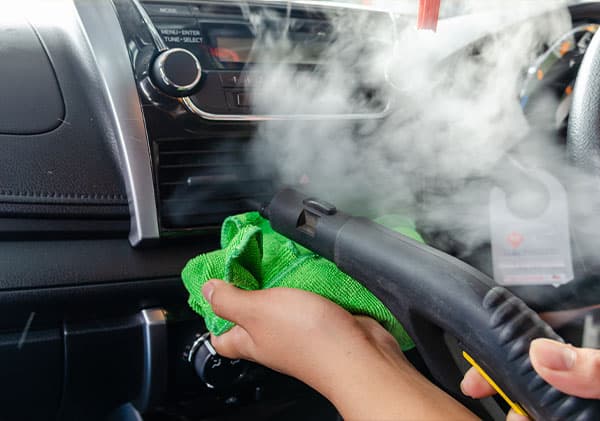
Most interior odors are surface-level problems. Spilled food, pet odors from a single ride, and general mustiness respond reasonably well to a thorough clean and some fresh air. Smoke is different because it does not just sit on surfaces. Smoke particulates are microscopic and they penetrate into every porous material in the vehicle's interior, including the foam beneath the seat fabric, the backing behind the carpet, and the headliner material above the roofline.
In a vehicle that has been smoked in regularly, tar and nicotine residue also coat hard surfaces including the dashboard, windows, vents, and seatbelt webbing. That residue continues releasing odor compounds long after the visible surface has been wiped down. In the Inland Empire heat, the release rate is faster and more intense than in cooler climates, which is why a vehicle that seemed manageable in winter can become genuinely unpleasant by July.
Any cleaning approach that only addresses the surface is buying time, not solving the problem.
What DIY Methods Can and Cannot Do
There is honest value in some home-based approaches for mild smoke exposure. Understanding where they work and where they stop helps you avoid wasting money on products that will not fix the actual problem.
Ventilation and sunlight: Leaving the vehicle open in direct sunlight with all windows down helps break down surface odor compounds. This works for very light, recent exposure. For anything more established, it reduces the smell temporarily without addressing the source.
Baking soda on fabric surfaces: Sprinkling baking soda generously on seats and carpet, leaving it overnight, and vacuuming it out draws some odor compounds from the surface layer of fabric. This is a legitimate first step, not a complete solution.
White vinegar wipe-down: Wiping hard surfaces including the dashboard, door panels, center console, and windows with a diluted white vinegar solution removes tar and nicotine residue from non-porous surfaces effectively. This step genuinely helps and is worth doing before anything else.
Activated charcoal: Placing activated charcoal bags inside the closed vehicle over several days absorbs airborne odor compounds. This works best as a finishing step after a thorough clean, not as a standalone treatment.
Odor eliminating sprays: Most consumer odor sprays use fragrance to cover the smell rather than chemistry to neutralize it. The smoke smell returns within days. Products containing enzymes or chlorine dioxide are more effective because they break down odor compounds rather than masking them, but even these work at the surface level only.
Where DIY methods consistently fall short is anything below the surface. Foam cushioning inside seats, the padding beneath carpet, and the headliner backing hold smoke compounds that no spray, powder, or wipe-down can reach from the outside. The HVAC system is another category entirely. If smoke traveled through the vents regularly, the evaporator core and ductwork are holding odor that will recirculate every time the fan runs. No consumer product addresses that without professional equipment.
When Professional Treatment Is the Right Call
If the vehicle was smoked in regularly over months or years, if it came from a previous owner with a smoking history, or if home methods have reduced but not eliminated the smell, professional odor treatment is the appropriate next step.
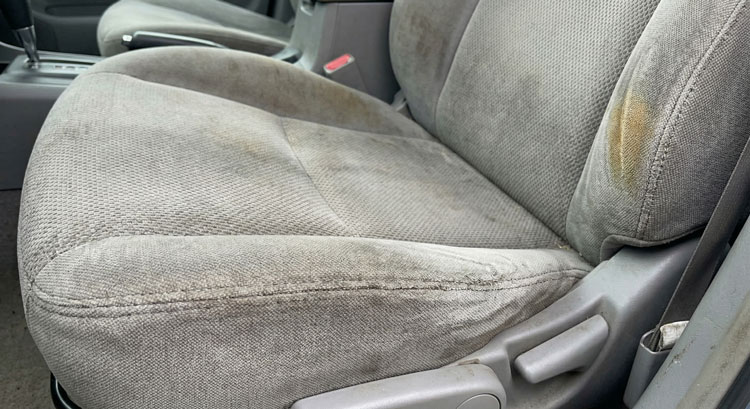
A professional interior odor treatment for smoke involves several stages that work at different levels of the problem simultaneously.
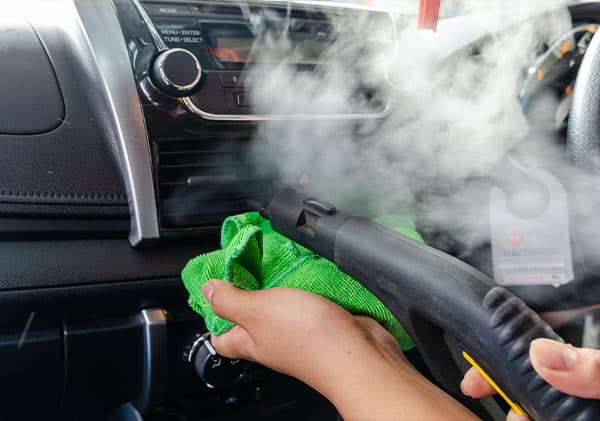
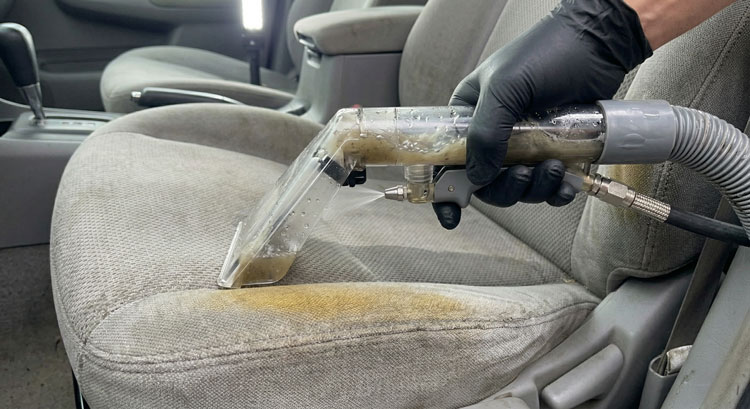
The process starts with a full interior detail including hot water extraction on all fabric surfaces. Extraction pulls contaminants from within the fabric and the foam beneath it, not just from the surface. Hard surfaces are cleaned with appropriate degreasers that cut through tar and nicotine film. The headliner requires careful, low-moisture treatment because over-wetting can cause it to separate from the backing.
Enzymatic odor treatment is applied to all fabric and carpet after extraction. Enzymes break down the organic compounds in smoke residue at a molecular level rather than covering them. This is the step that produces lasting results on fabric surfaces.
The HVAC system is treated separately by running an odor-neutralizing solution through the intake while the system operates, reaching the evaporator and ductwork that no surface cleaning can access.
For severe cases, ozone treatment is the most thorough available option. An ozone generator placed inside the closed vehicle produces ozone gas that penetrates every surface, seam, and cavity in the interior and oxidizes odor compounds on contact. It reaches areas that no physical cleaning or spray application can access. Ozone treatment requires the vehicle to be unoccupied during the process and aired out thoroughly afterward, but for a vehicle with established smoke odor it is the most complete solution available.
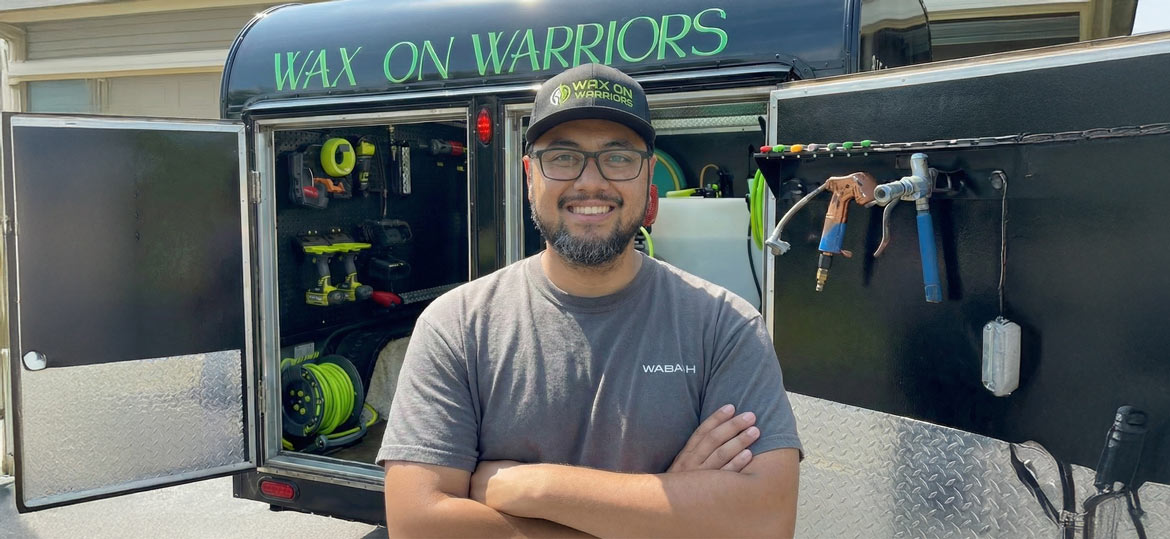
A professional auto detailing service at Wax on Warriors handles the full scope of smoke odor removal including extraction, enzymatic treatment, HVAC treatment, and ozone where needed, coming fully equipped to your driveway anywhere in Menifee, Murrieta, Lake Elsinore, Riverside, Fallbrook, or Escondido.
The Resale and Lease Return Consideration
Smoke smell in a vehicle has a direct and measurable impact on resale value. Buyers in the Inland Empire used vehicle market consistently walk away from vehicles with detectable smoke odor or negotiate significant price reductions. For lease returns, smoke odor is one of the most commonly charged excess wear items and the reconditioning charge from the dealership is almost always higher than the cost of professional odor treatment before the return appointment.
If you are preparing a vehicle for sale or approaching a lease return, professional odor treatment is one of the highest-return investments you can make relative to its cost. A vehicle that presents cleanly and smells neutral is worth meaningfully more than one that requires the buyer or dealership to factor in remediation costs.
Drivers approaching a lease return in the Inland Empire can also explore the Wax on Warriors maintenance club to keep the interior in inspection-ready condition through the remainder of the lease term rather than addressing everything at once at the end.
Book at waxonwarriors.com/booking or call (833) 421-0018. If Wax on Warriors has taken care of your interior, a Google review helps other Menifee drivers find professional odor removal when they need it.
Frequently Asked Questions
Does smoke smell ever fully go away on its own?
Not from a vehicle that was smoked in regularly. Light, recent smoke exposure can fade with ventilation over time. Established smoke odor embedded in seat foam, carpet backing, and the headliner does not dissipate on its own because the compounds are trapped within porous materials rather than simply sitting on the surface. In Menifee's heat, the off-gassing from those materials tends to get worse over summer rather than better.
How long does it take to remove smoke smell from a car professionally?
A professional interior detail with enzymatic treatment and ozone typically takes three to five hours depending on vehicle size and severity of the odor. Ozone treatment requires additional time inside the closed vehicle, usually two to four hours, followed by a ventilation period. Most smoke odor situations can be addressed in a single service day.
Will an ozone treatment damage my car interior?
Ozone treatment is safe for vehicle interiors when applied correctly. Exposure time and concentration are managed by the detailer based on the severity of the odor. Electronics, rubber, and certain plastics can be sensitive to prolonged high-concentration ozone exposure, which is why professional application by someone experienced with the process matters. A properly conducted ozone treatment does not damage factory interior materials.
Can smoke smell affect a car's resale value?
Yes, significantly. Smoke odor is one of the most consistently deal-breaking conditions for used vehicle buyers and one of the most commonly flagged items at lease return inspections. Buyers either walk away or negotiate price reductions that exceed what professional odor treatment would have cost. Addressing the smell before listing or returning the vehicle is almost always the better financial decision.
What is the difference between odor masking and odor removal?
Masking uses fragrance to cover the smell temporarily. The smoke odor returns within days because the source compounds are still present in the materials. Removal uses enzymatic chemistry and ozone to break down the actual odor compounds at a molecular level, eliminating the source rather than covering it. Consumer sprays almost universally mask. Professional enzymatic treatment and ozone remove.